


Courtesy of Gerald Wolfley
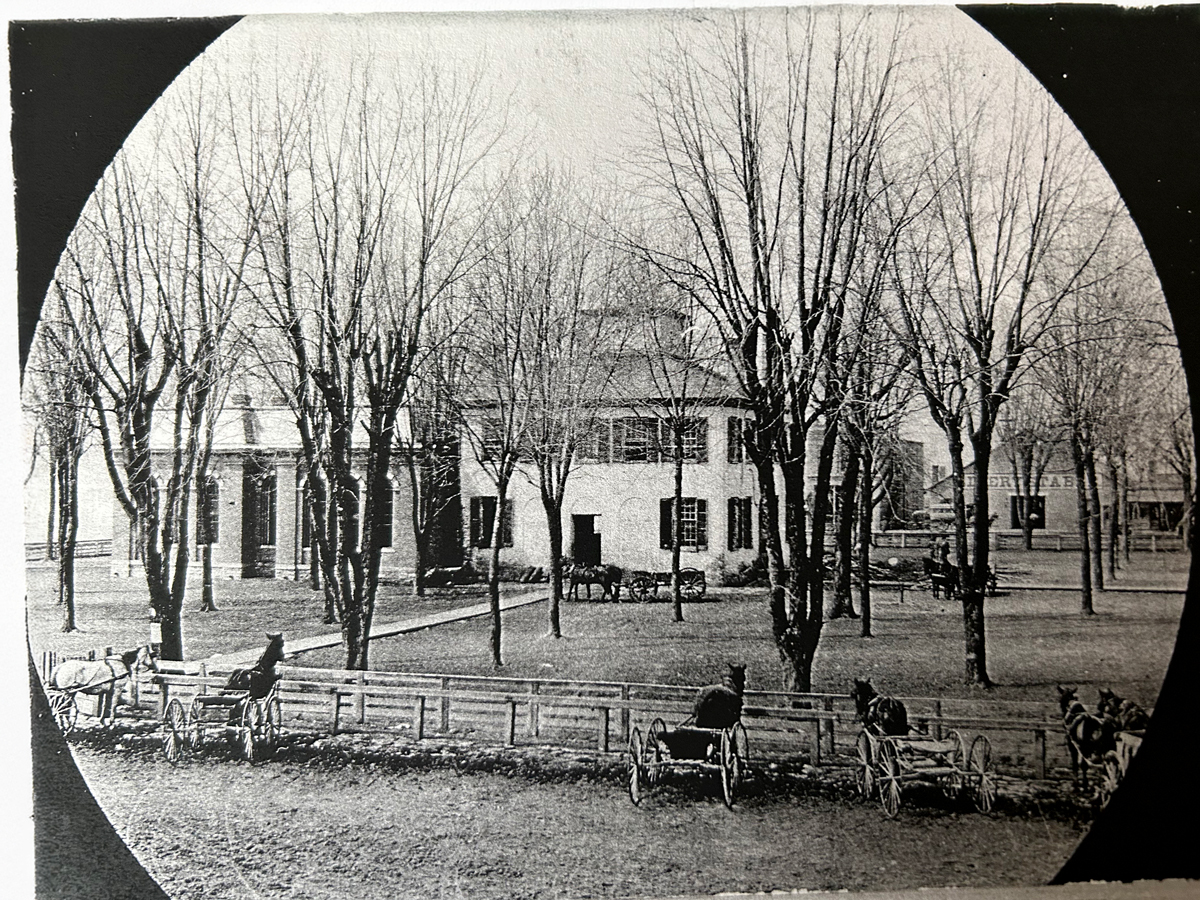
The first courthouse in Greene County was constructed in 1821, just months after the county was organized. Built on the west side of the square, it was a modest wooden structure contracted to William and Thomas Finley at a special commissioners’ meeting on June 13, 1821. Though agreed upon in 1821, the building was not completed until the following year. Historical accounts vary on the cost—some state $380, others $700. The structure was a long frame building set sideways to the street. Years later, it was cut in half, rotated, and repurposed as store rooms.
In the courtyard, whipping posts once stood—two in the northeast corner and one in the southwest—reflecting a very different era of justice.
By 1828, the need for a more substantial and dignified courthouse became evident, but it wasn’t until March 1830 that action was taken. Moses Stevens was tasked with drafting plans, and at a special meeting in April, a contract was awarded to Thomas Rattan to construct a brick courthouse at the center of the square. The contract price was $7,000, to be paid in installments, though Rattan agreed to accept $5,500 in full payment once collected.
The design called for five exterior double doors—three on the east, one on the north, and one on the south. The first floor featured a large courtroom and two offices; the second floor housed a large public room and two petit jury rooms. Completed in early 1832, the new building was considered the finest courthouse in the state at the time. It measured 44 by 46 feet, was two stories tall, and boasted an impressive tower. Topping the structure was a cupola with a tin ball, two feet in circumference, shipped from St. Louis in a large barrel. This shining ornament was visible for miles and remained in pristine condition until it was removed in 1882—revealing it had become target practice, allegedly starting with Judge Link, who fired at a woodpecker disturbing court proceedings.
The tin ball was preserved for a time by Clement Clapp, editor of The Patriot, but by 1887 it lay neglected behind the Baltz Brothers & Co. building.
Over time, the once-celebrated courthouse became unsafe and was condemned. Circuit Court sessions were held in rented spaces while debates over relocating the county seat to White Hall or Berdan delayed progress on a new building. Around 1883, fireproof vaults were added to the old structure for the Circuit and County Clerk offices. These vaults would be retained in the construction of a new courthouse.
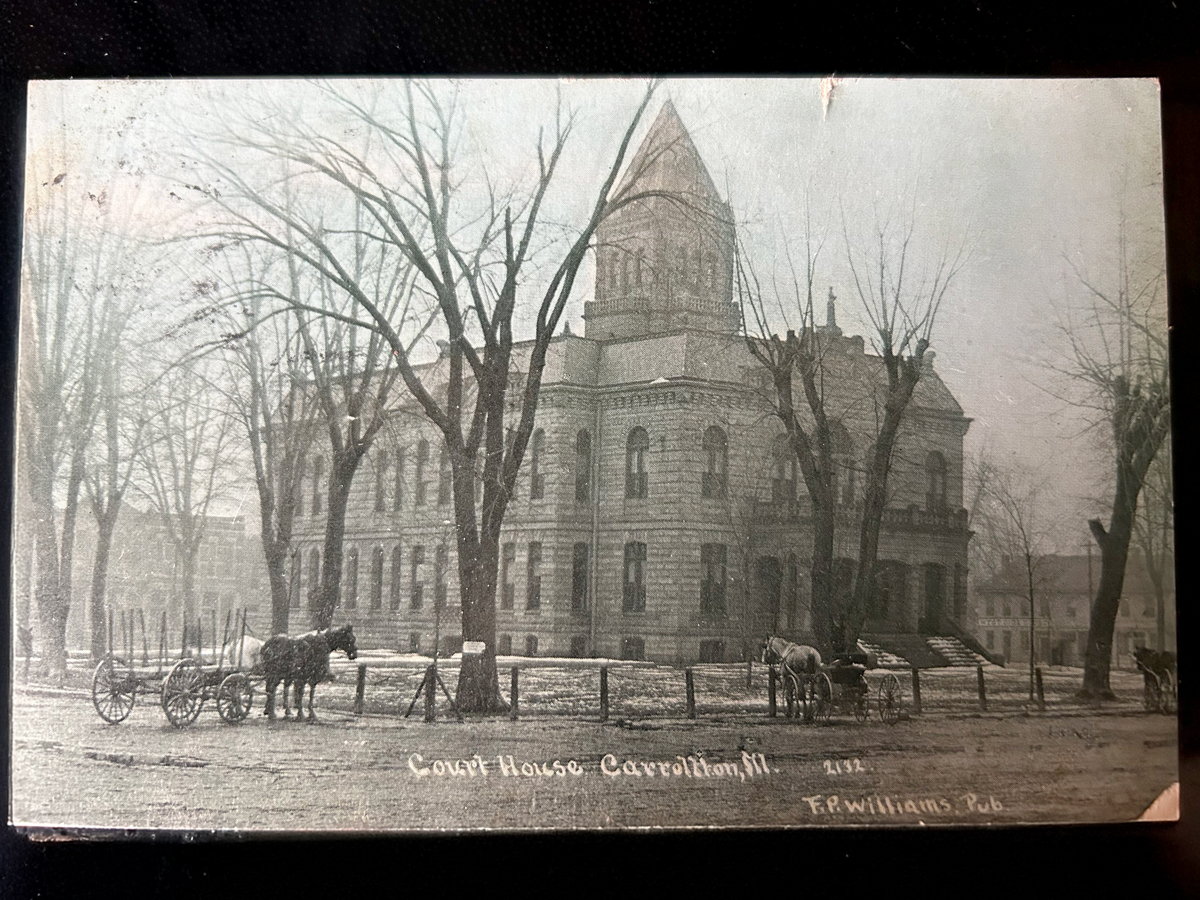
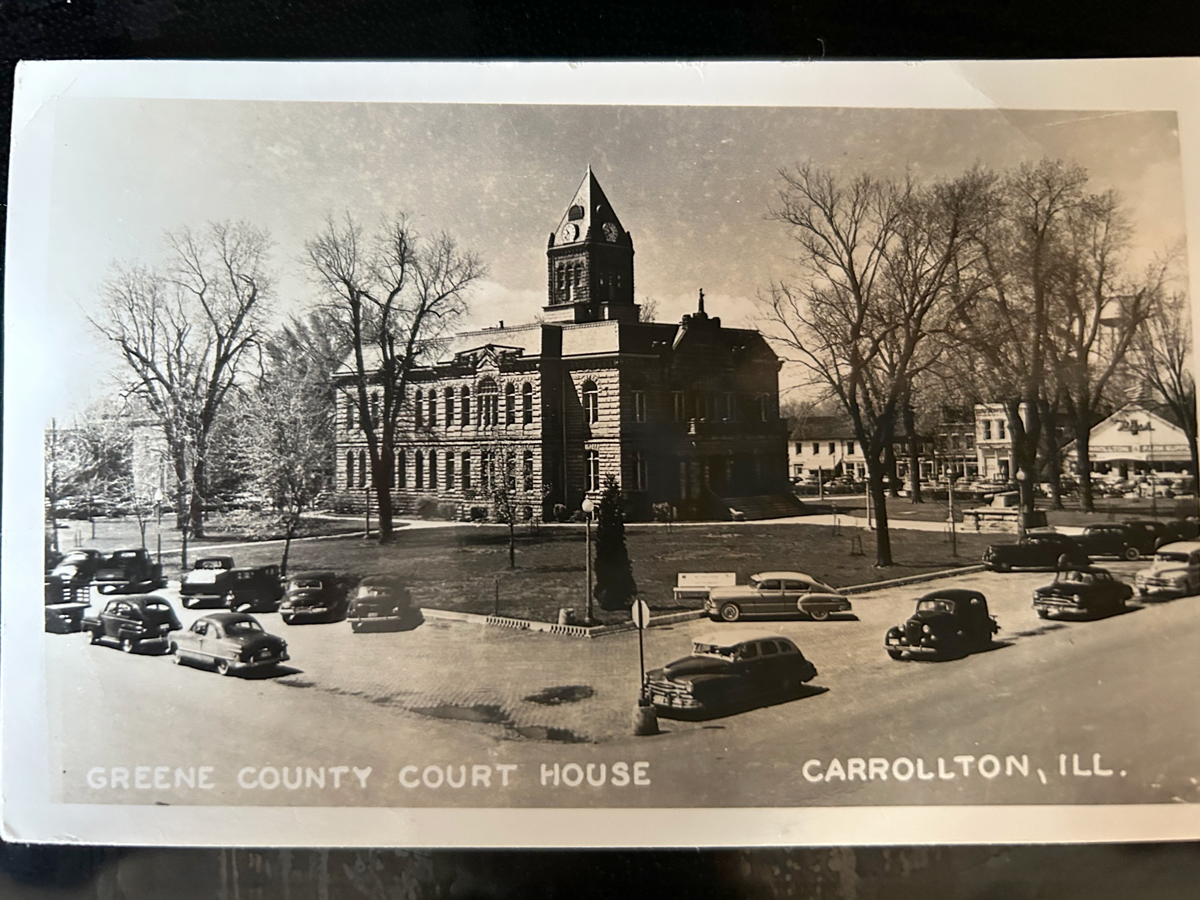
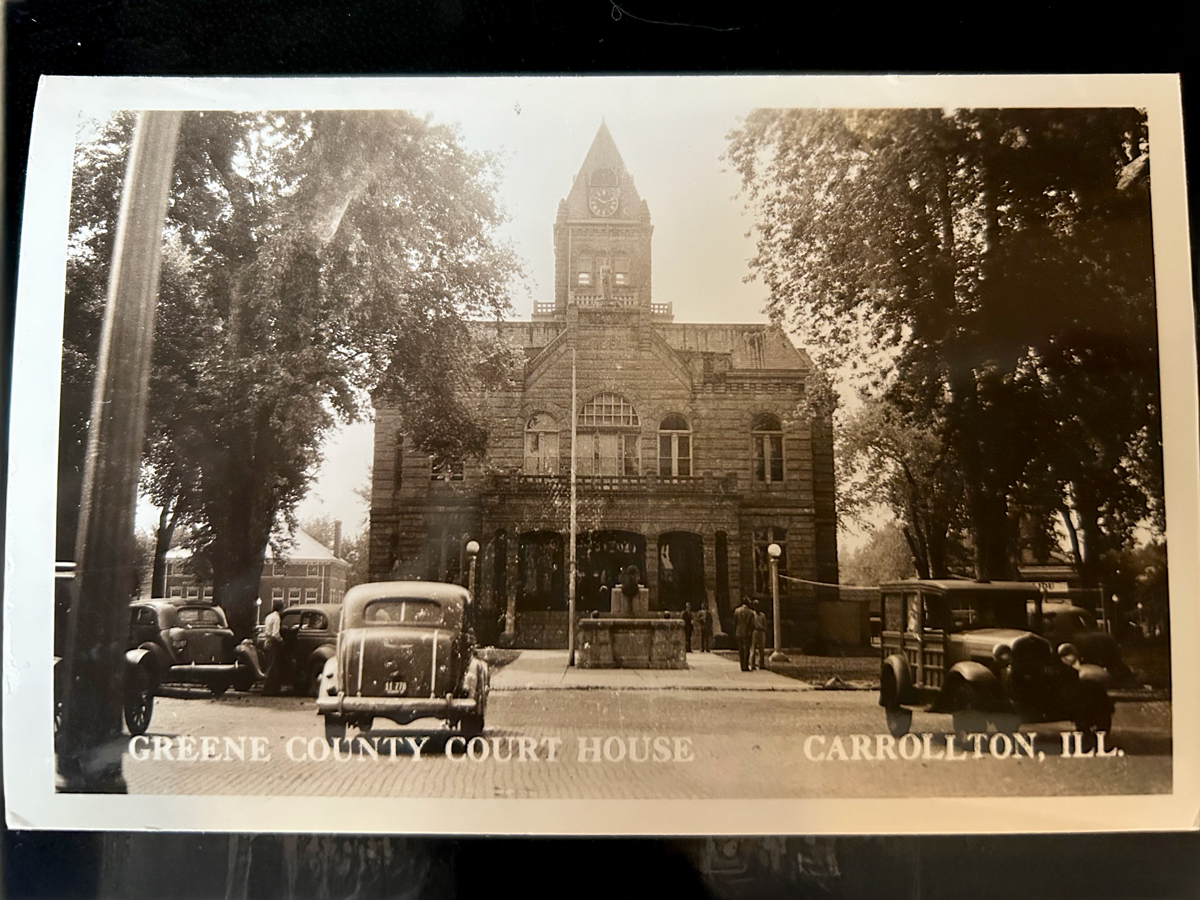
In 1891, the cornerstone for the current courthouse was laid. The project was contracted for $39,700, with final costs totaling $40,231. The building, designed by Chicago architect Henry Elliott and constructed by F.W. Menke of Quincy, measured 80 by 125 feet. It features 8-inch-thick white Berea sandstone walls over a bricklayer, resting on a limestone foundation with 20-inch-thick walls. The main hallway’s border is Italian marble chips set in concrete, taking an Italian artisan eight days to complete. Floors are white marble, slate, and Roman mosaic tile; oak was used extensively throughout the interior.
Atop the courthouse stands the 7’4″ terra cotta Statue of Justice. The red granite steps at the north and south entrances, and the pink marble floor on the north porch, add to the building’s grandeur.
In March 1893, an elegant chandelier with a wooden medallion and 26 lamps was installed in the courtroom at a cost of $145. However, by the early 2000s, roof leaks and water damage rendered the courtroom unusable. Trials were temporarily held at the local Knights of Columbus Hall and the Methodist Church.
Historically, a heavy chain once surrounded the courthouse lawn to deter horses and carriages; most was scrapped during WWII, though a small section remains in the southwest corner. The first sidewalk was made of wood, with a concrete sidewalk added in September 1905 for $0.13 per square foot, totaling $583.83.
THE THOMAS CARLIN MONUMENT
Located on the southeast corner of the courtyard, this monument honors Thomas Carlin, Illinois’ sixth governor. Dedicated on July 4, 1917, it commemorates his many contributions, including the donation of 23 acres for county use. Carlin was Greene County’s first elected sheriff (1821), a state senator (1824), a commander during the Black Hawk War, and served as governor from 1838 to 1842. He died in Carrollton on February 14, 1852.
THE CANNON (RIFLE)
Positioned along the north walk is a 100-pound Parrott rifle, often referred to simply as “the cannon.” Weighing approximately five tons, it was gifted to the Carrollton Post of the G.A.R. by the U.S. government. Designed by R.P. Parrott, it fired 100-pound projectiles and saw action aboard the gunboat Sassacus, including off the coast of Brunswick, Georgia. It arrived in Carrollton on October 26, 1900, and was formally dedicated a year later.
HENRY T. RAINEY MONUMENT
Henry Thomas Rainey was elected to Congress in 1901 and served until 1921, and again from 1923 until his death. His statue and the park in which it stands were dedicated on August 12, 1937. Rainey’s estate, Walnut Hall Farm, lies about a mile east of Carrollton.
THE COURTHOUSE CLOCK
Installed in 1893 by the E. Howard Watch and Clock Company, the courthouse clock was hailed as “first class in every particular.” Its four black-faced dials measure five feet across, and the clock sits 70 feet above the ground. The original mechanism included a 1,200-pound bell, a 70-pound pendulum, and weights for striking and running totaling over 1,000 pounds. The striking weight had a 50-foot fall and was suspended by copper wire. Wound every eight days, the clock struck on the hour and half-hour.
Because the building was not initially designed for such a large mechanism, internal modifications to the tower were necessary. On April 17, 1907, one of the clock’s iron weights broke free, crashing through to the rotunda floor.
Originally visible from the courthouse’s open center, the clock tower was later hidden by a ceiling installation. In April 1968, the clock was electrified by George Kavanaugh of St. Louis for $2,500, shared by the city, township, and county. The original face was retained, and a backup motor added. The dedication of the newly electrified clock took place on July 8. Though efforts were made over the years to maintain the clock, records do not clearly indicate when it eventually stopped working.